Designing a system-level intervention to reduce uncertainty in hospital care.
MediBridge is a patient–family communication platform designed in response to a deeper systemic problem in hospital care: uncertainty compounds when information is fragmented, delayed, or inconsistently delivered. Rather than treating communication as a single feature, this project began by mapping the full patient–family system—tracking emotional states, touchpoints, and breakdowns across admission, surgery, recovery, and discharge.
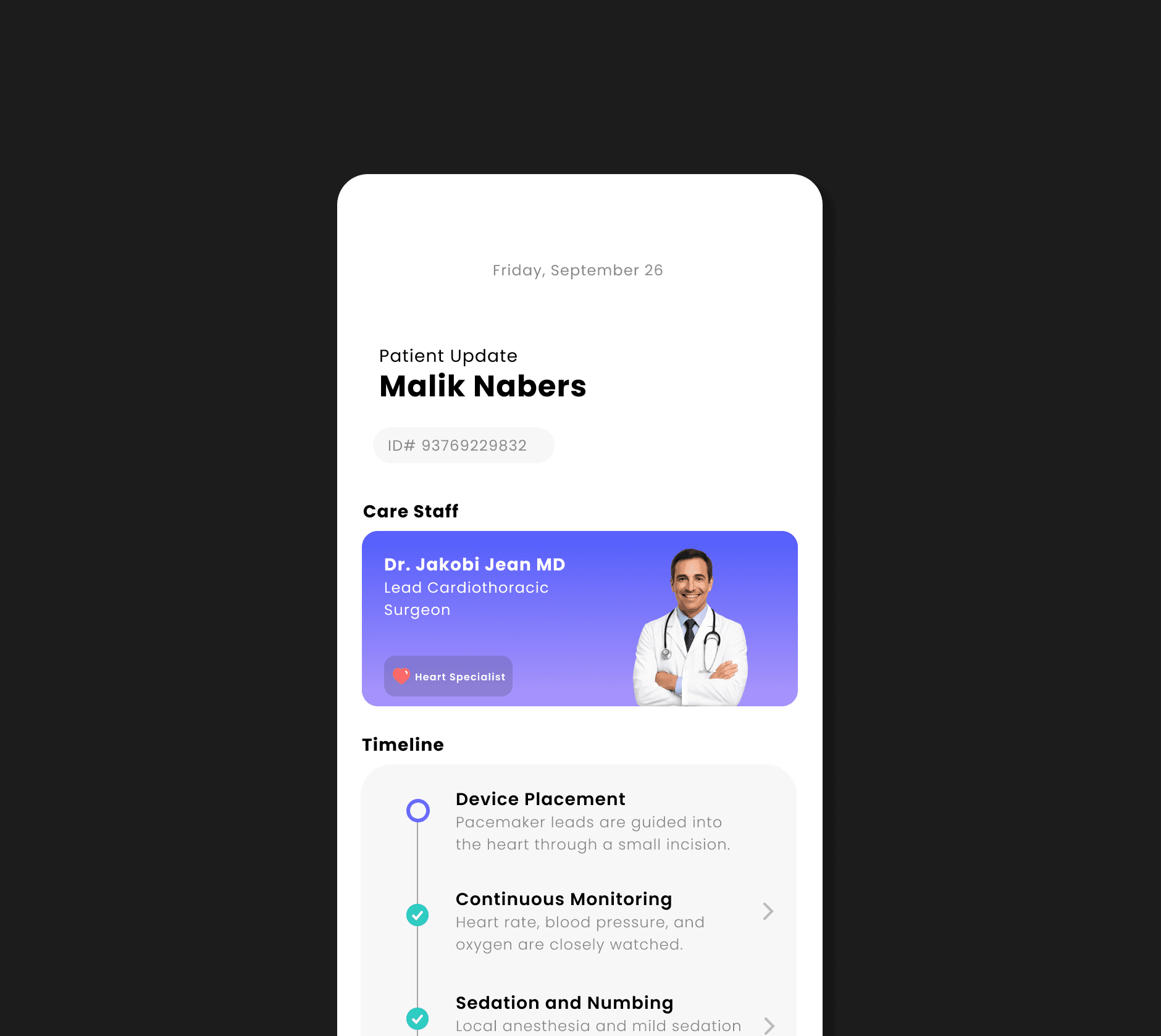
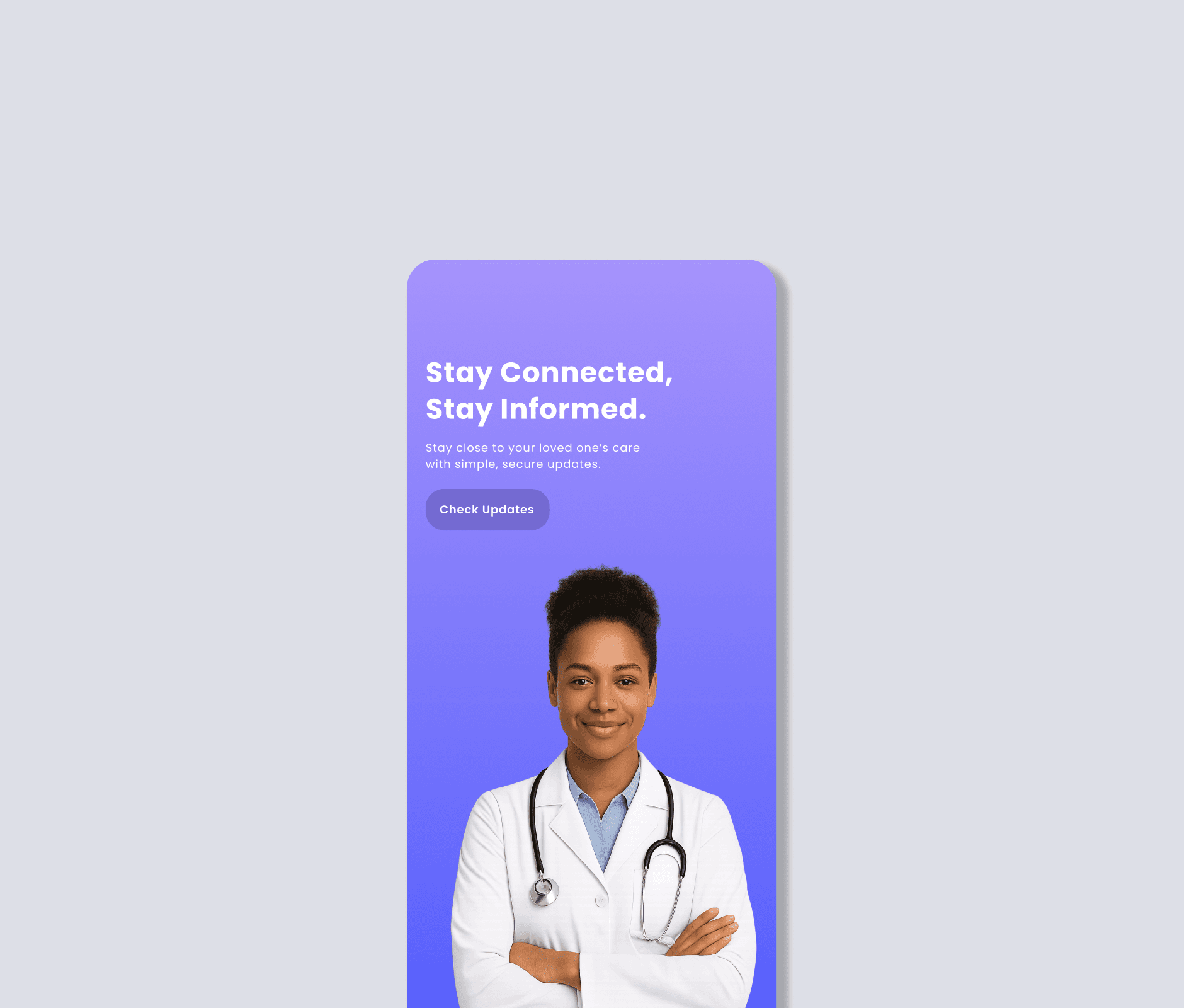
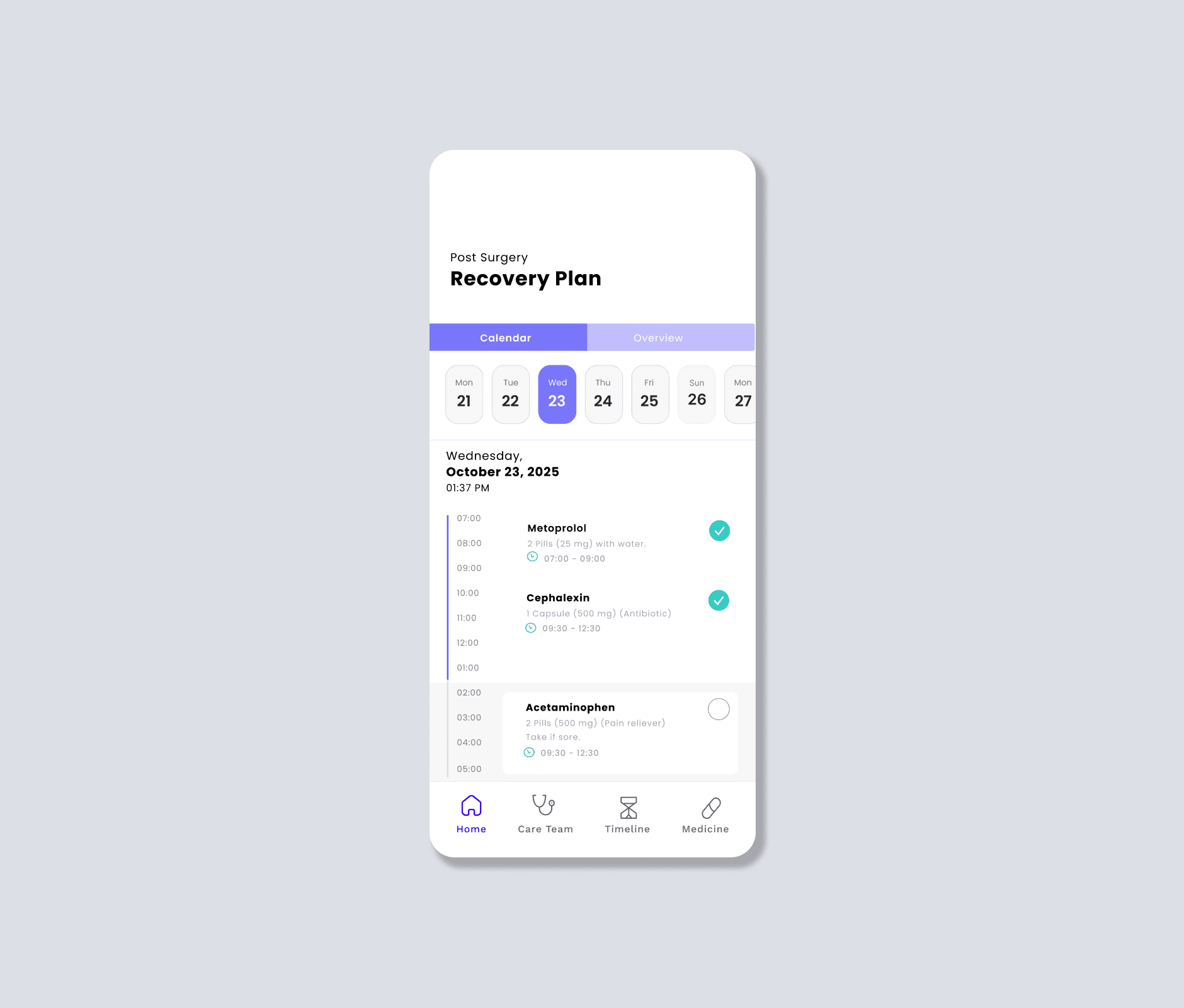
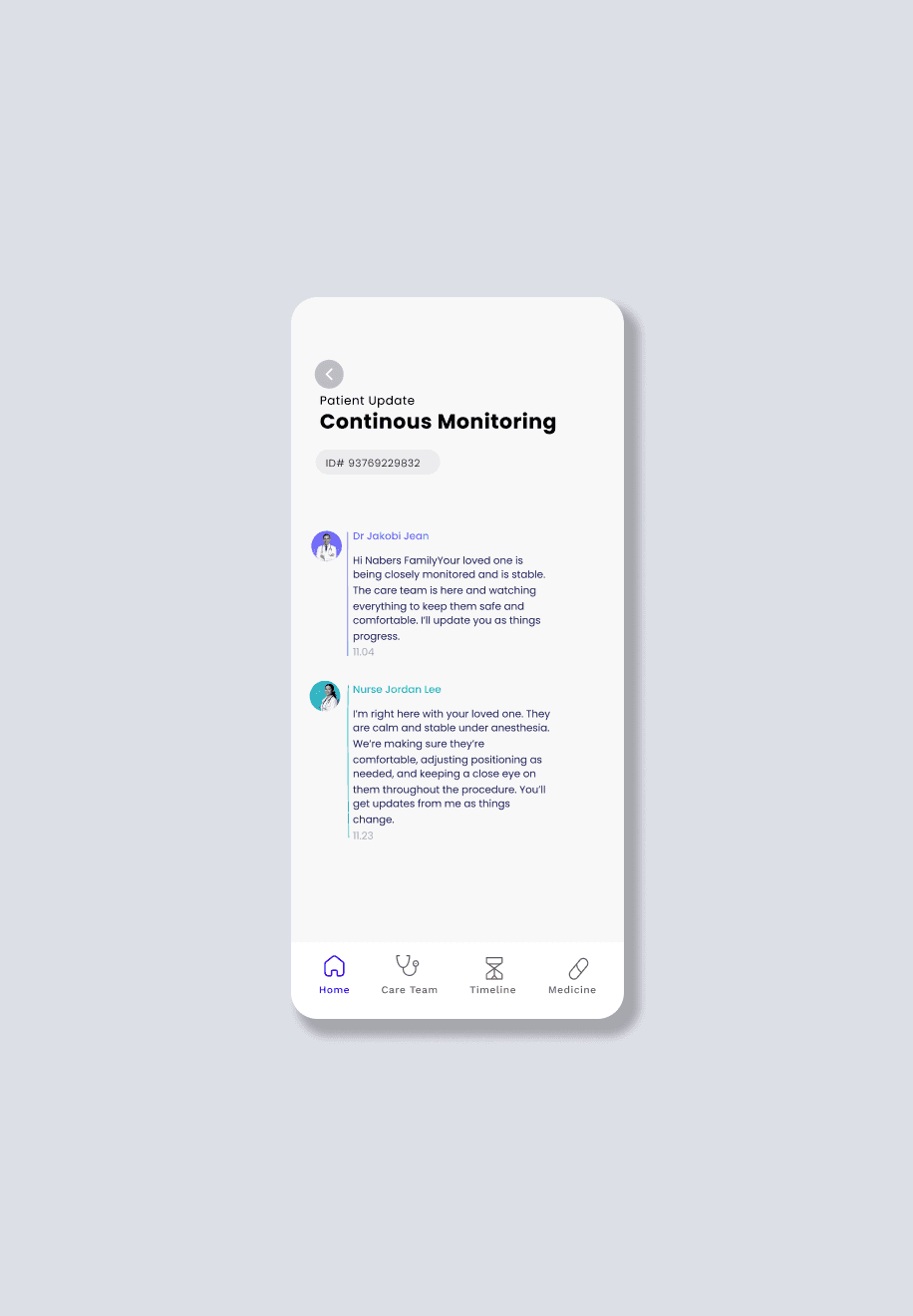
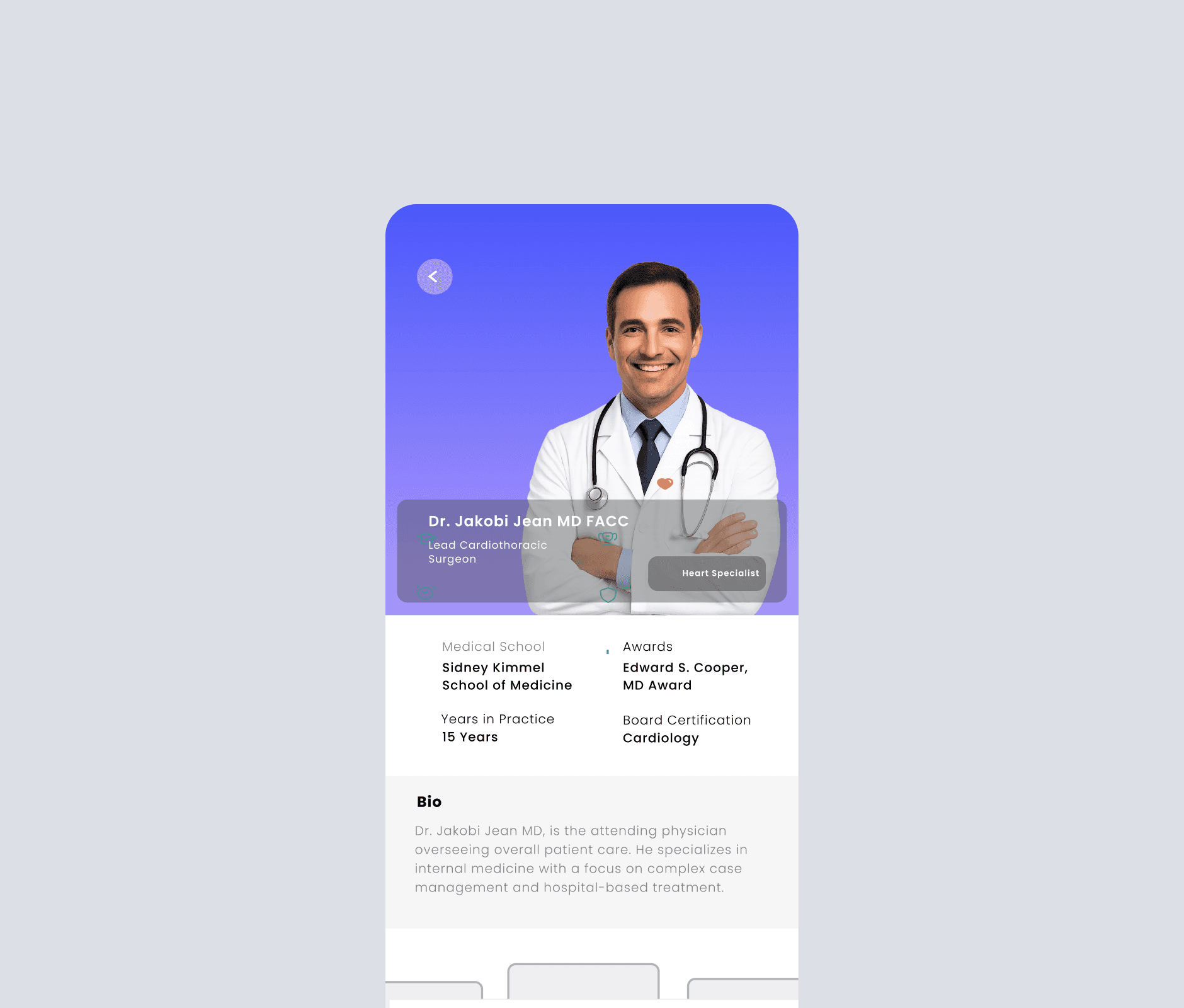
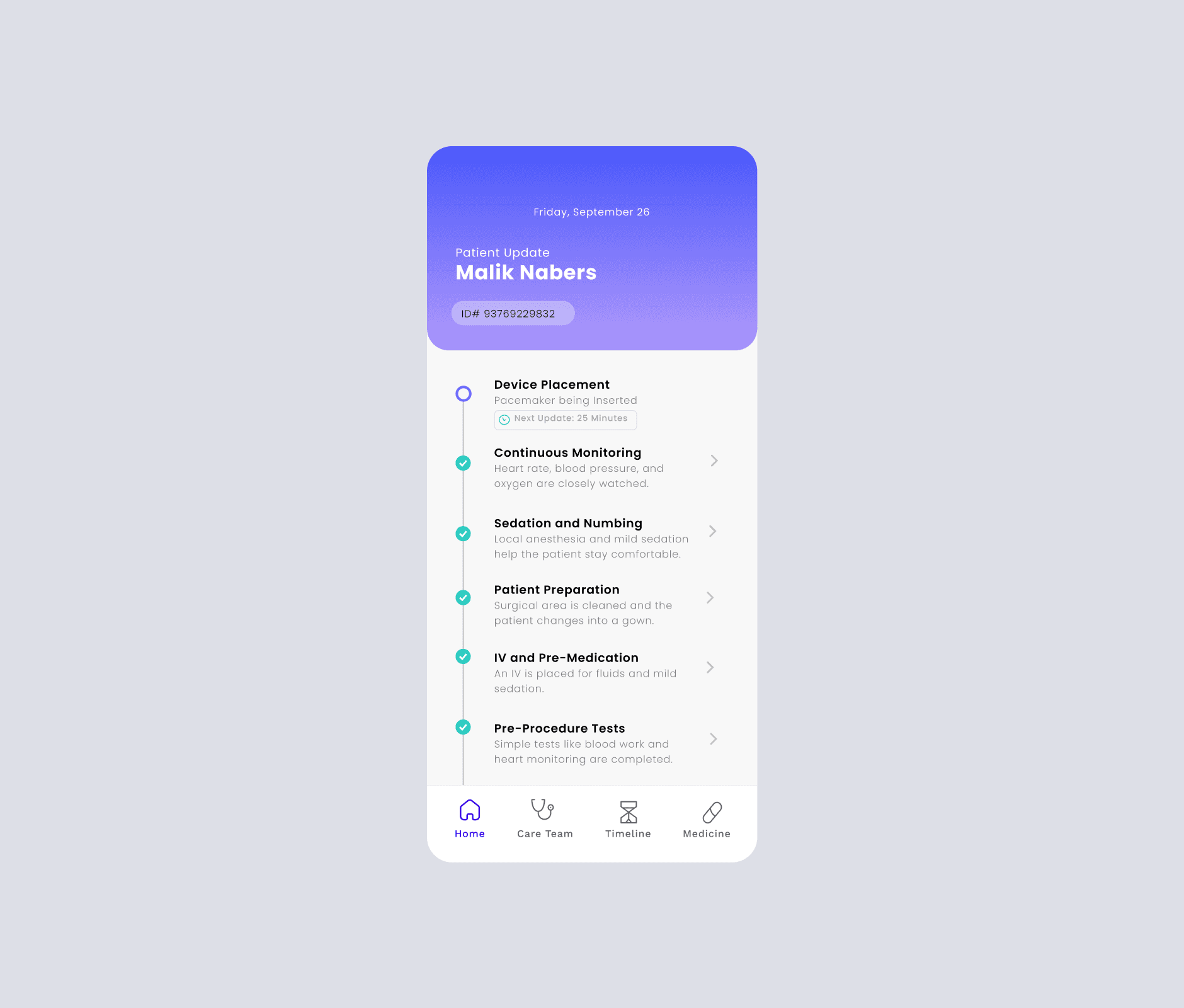
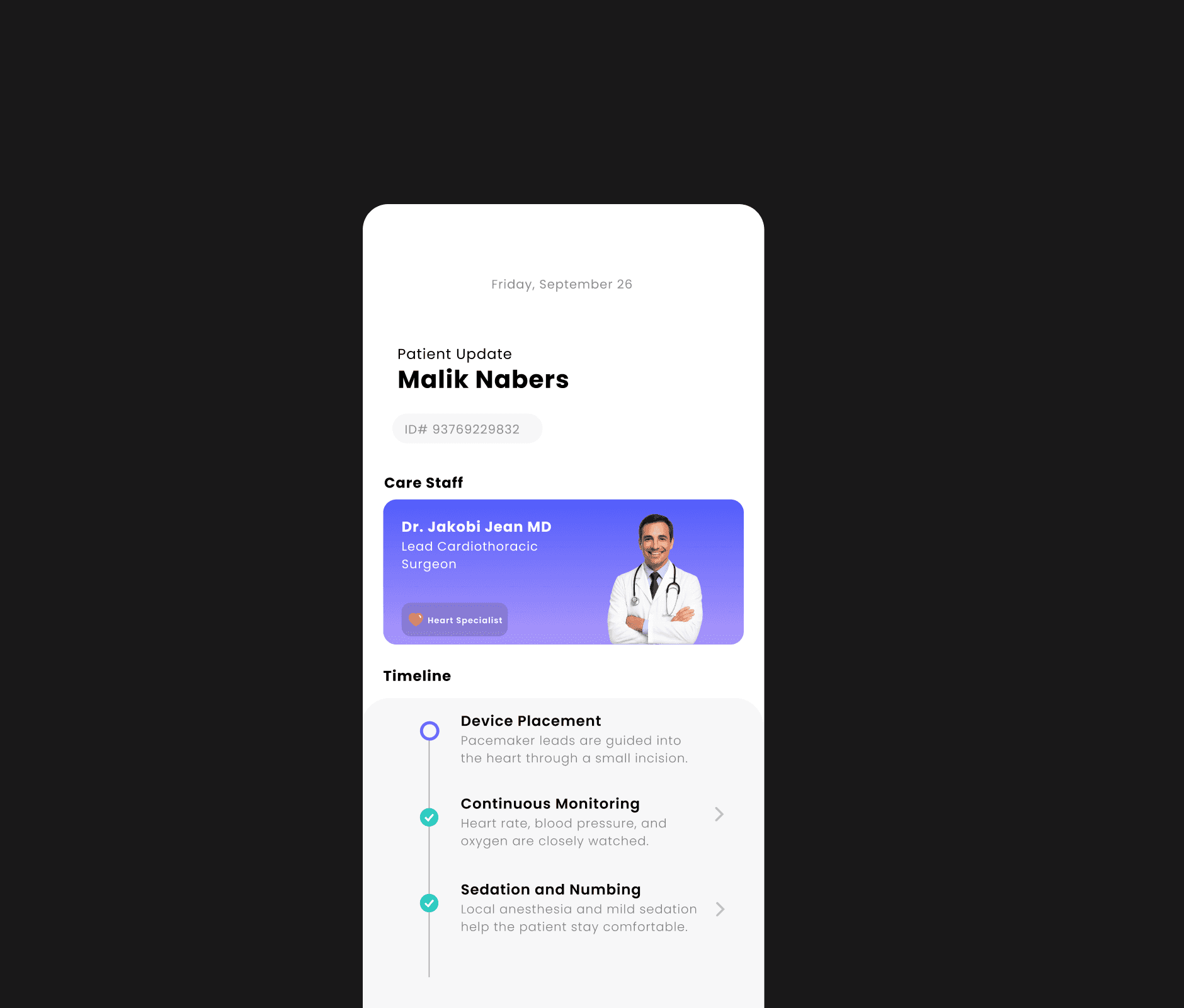
Through system mapping and stress analysis, I identified a reinforcing anxiety loop where families seek reassurance but receive limited or delayed updates, increasing emotional strain for both families and hospital staff. MediBridge intervenes at this point by creating a single, reliable communication channel that delivers real-time updates, care timelines, and post-recovery guidance. Designed mobile-first and grounded in existing hospital workflows, the platform prioritizes clarity, continuity, and emotional reassurance across moments of high uncertainty.
Turning complex care systems into clear, human-centered experiences.
This project required designing beyond screens and focusing on how people, processes, and emotions interact within healthcare systems. From QR-based onboarding at the front desk to messaging written directly by care teams and structured recovery timelines, each element was designed to reduce friction without adding operational burden.
MediBridge strengthened my ability to use systems thinking as a design tool—identifying where intervention matters most and translating complex, real-world workflows into digital experiences that feel supportive, understandable, and realistic to implement.